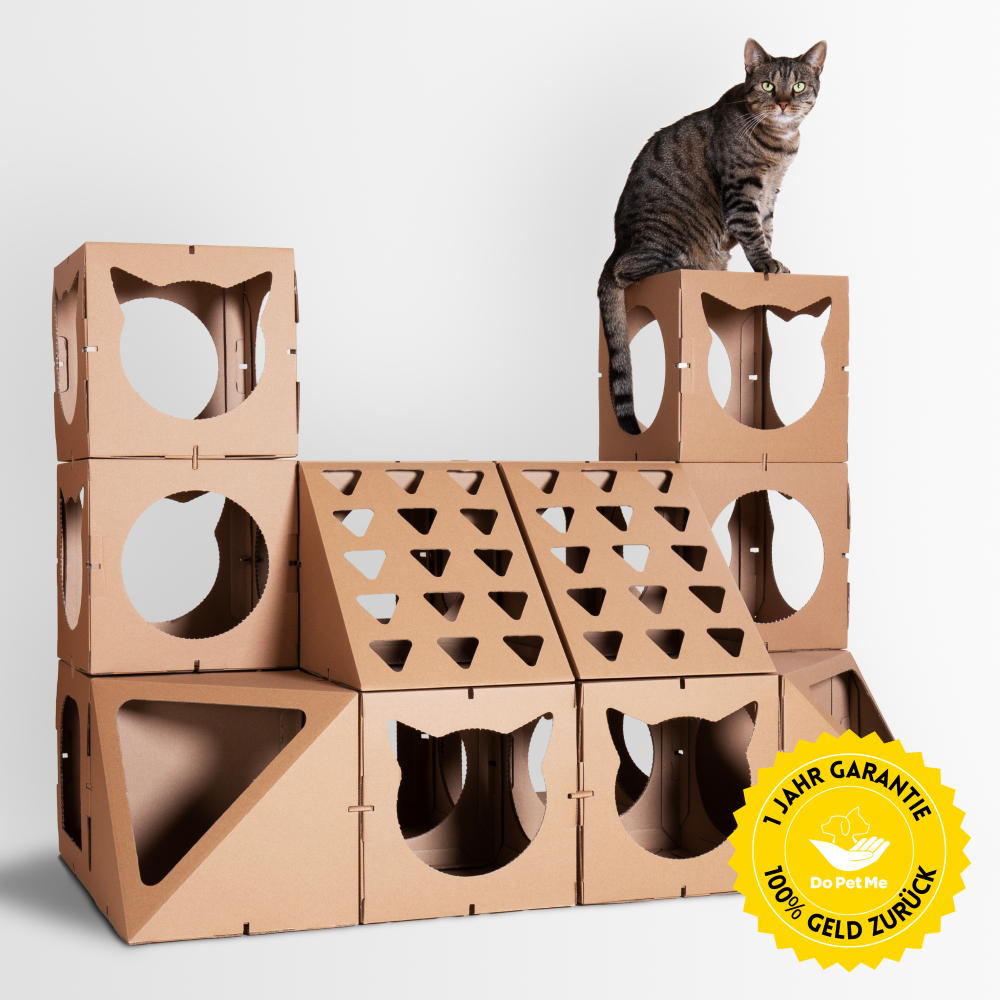


The Science Behind Cardboard Cat-Land and How to Make It Even Better for Your Cat
No sooner does a package arrive than the cat is inside it. Even before you know what was delivered, your feline friend has already claimed the box as private property. A classic that every cat owner laughs about, but why is that?
The answer isn't "because cats are weird."
It's: Because cardboard boxes perfectly meet a cat's biological needs.
In this article, we'll dive deep: instincts, psychology, temperature, security, territorial behavior. And in the last part, I'll show you how to build a small world for your cardboard-loving cat – no ads, just from real experience.
1. Cardboard Boxes Offer Security, and Cats Are Little Controllers
One of the strongest drivers of cat behavior is the need for control with simultaneous security.
A cardboard box fulfills both:
-
only one opening → perfect overview
-
solid walls → protection from stimuli
-
limited space → stress reduction
Studies show that cats measurably reduce their stress levels when they have cardboard retreats – even in animal shelters.
Cardboard boxes are like a small shield against the world.
2. Cardboard Smells "Right" – Not Sterile
Wood fibers, cardboard, paper glue:
Everything smells neutral, warm, "earthy."
Unspectacular for us.
For cats: pleasantly unobtrusive.
Cats avoid artificial smells like plastic or heavily treated fabrics. Cardboard, however, is:
-
warm
-
low-odor
-
natural
-
easily "scribable" with their own scent marks
Exactly what cats want.
3. Cardboard Has the Perfect Temperature
Cats prefer a surface temperature of 30–36 °C.
Homes are usually cooler – 20–24 °C.
A cardboard box insulates like a small cocoon:
-
it retains body heat
-
it protects from drafts
-
it stores the cat's own warmth
That's why cats sleep longer and deeper in cardboard boxes – the temperature is just right.
4. Cardboard Boxes are Perfect for Hunting Behavior
It sounds absurd, but for cats, cardboard boxes are:
caves, camouflage hides, and hunting posts all at once.
From a cardboard box, the cat can:
-
observe
-
lurk
-
launch surprise attacks
-
control the surroundings
The typical "paw attacks" from an opening are also related to this. Cats imitate their natural hunting behavior – just on a sofa-level version.
5. Cardboard Boxes are Flexible – and Cats Love Change
Cats want to control their environment, but they also love small changes that make them curious:
-
new boxes
-
new openings
-
new smells
-
new locations
A cardboard box is the ideal blend of stability and novelty.
It's familiar and exciting at the same time.
6. How to Build a Real Adventure for Your Cardboard Fan
You don't have to be a crafting pro to build a little cardboard world for your cat. Here are some practical tips:
Tunnel + Opening = Safe Space + Hunting Ground
Cut holes in the sides → cat can slip in and paw out.
Connect Two Boxes = New Territory
Connect two boxes with tape → small tunnel.
In, up, through, cats jump around wildly.
Cardboard Box + Soft Underlay = Sleeping Spot
Blanket, T-shirt, old cushion – done.
Cardboard Landscape Instead of Toys
2-3 cardboard boxes next to each other provide more entertainment than expensive toys.
7. If you don't feel like crafting...
Many of our readers tell us they love their cat but don't have the time or desire to constantly craft new cardboard boxes. Understandable, daily life is busy enough.
That's why we offer cardboard houses that are:
-
sturdy enough for daily use
-
consider cat instincts (cave, scratching, playing)
-
look good when they sit in the living room for weeks
If you're curious:
You can find our cardboard houses here: Cardboard Cat Houses